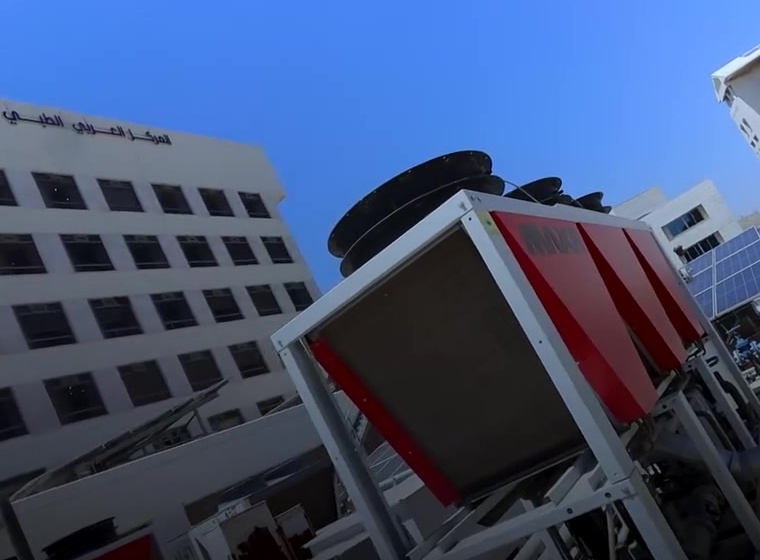
Hive Fitness Amman — Staged Gas-to-Heat-Pump Conversion with Boiler Retained for Peak Loads
At Hive Fitness in Amman, the existing system relied on a gas boiler that had already been installed and paid for, while the club could not shut down for a complete system replacement. The owner therefore required a staged transition that reduced gas dependency without discarding the existing investment or compromising operation.
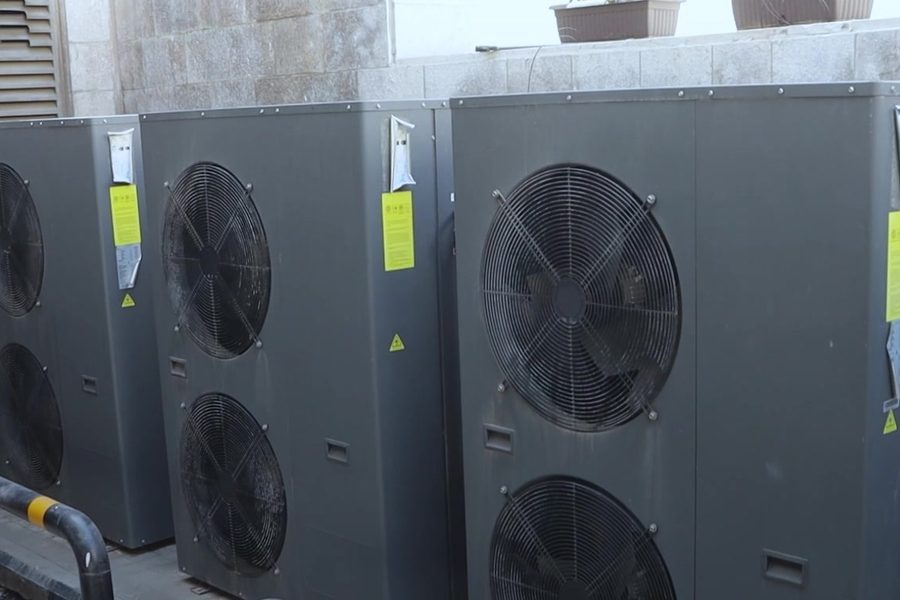
Instead of sizing the heat pump according to the boiler’s full rated capacity, the load-duration curve was analyzed. The analysis showed a broad base-load range operating for most of the year, with a much narrower peak occurring for limited hours. The heat pump was therefore sized to serve the base load at less than 20% of the boiler’s rated capacity, while the existing boiler was retained for peak demand and backup.
This approach allowed the club to preserve its existing gas infrastructure and redundancy while shifting a significant portion of operating hours to the heat pump with a much smaller initial investment than full replacement.
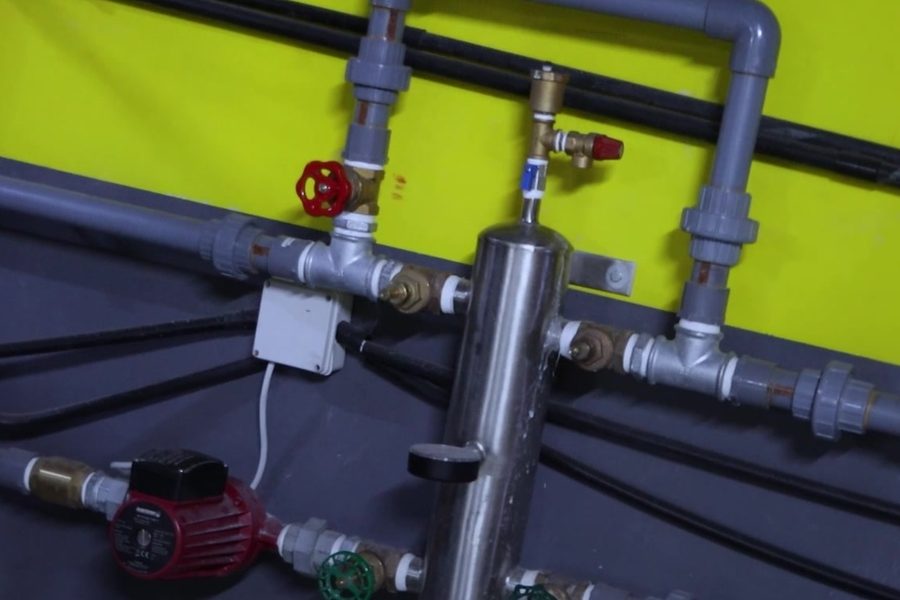
Hydraulically, the system was designed with a hydraulic separator to decouple the heat-pump circuit from the distribution circuit, together with adequate system volume to reduce short cycling, air separators, expansion vessels, and a plate heat exchanger to isolate pool water from the main thermal system.
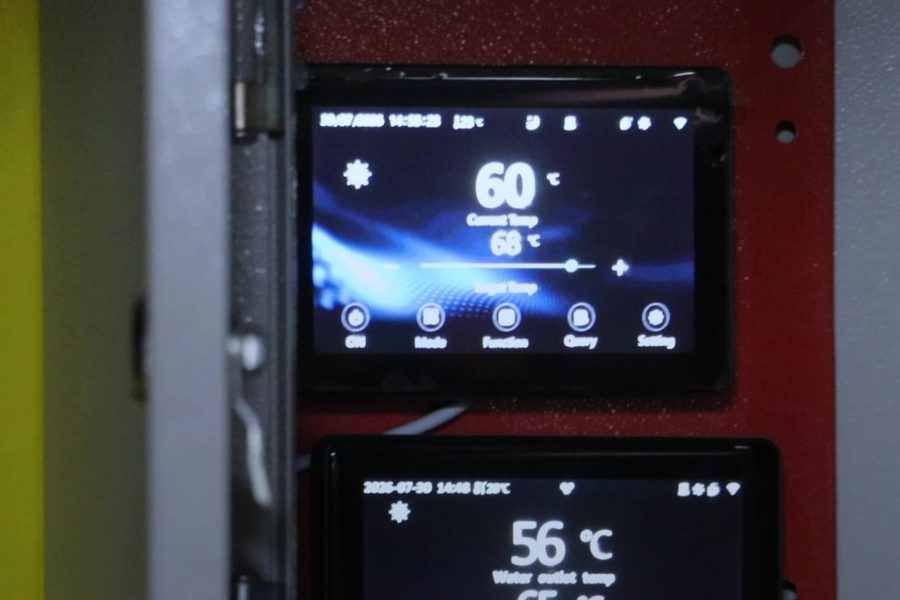
At the time of documentation, the control screens showed operating temperatures of approximately 60°C and 56°C. These are operating readings rather than claimed savings. Consumption records are still being collected, so no savings figure is published until a reliable measurement period is complete.
Challenges
Converting an operating fitness club from an existing gas system to heat pumps without shutting down the facility or discarding a boiler that had already been purchased and installed, while allowing the owner to transition in stages rather than fund a complete replacement at once.
The solution also needed to maintain peak-load capability and operational redundancy throughout the transition.
Solutions
The load-duration curve was analyzed to identify the base thermal load that operates for most annual hours. The heat pump was then sized specifically for this range at less than 20% of the existing boiler’s rated capacity.
The gas boiler was retained for peak demand and backup operation, creating a hybrid system that supports a staged transition from gas to electricity while limiting the initial capital requirement.
A hydraulic separator was used to decouple the heat-pump and distribution circuits, together with adequate system volume to reduce short cycling, air separators, expansion vessels, and a plate heat exchanger to isolate pool water from the primary thermal system.
Photo Gallery