Al Hussein Youth City — Integrated HVAC & Heat-Recovery System for the Olympic Pool
The original system relied on two separate technologies operating simultaneously: a chiller for cooling and a boiler for heating, with the boiler serving both pool water and indoor air loads. Under many operating conditions, one system was producing heat while another was rejecting it within the same building.
At the same time, the ventilation system removed moisture from the pool air and discharged the associated heat outdoors, effectively rejecting thermal energy that had already been produced by the heating system.
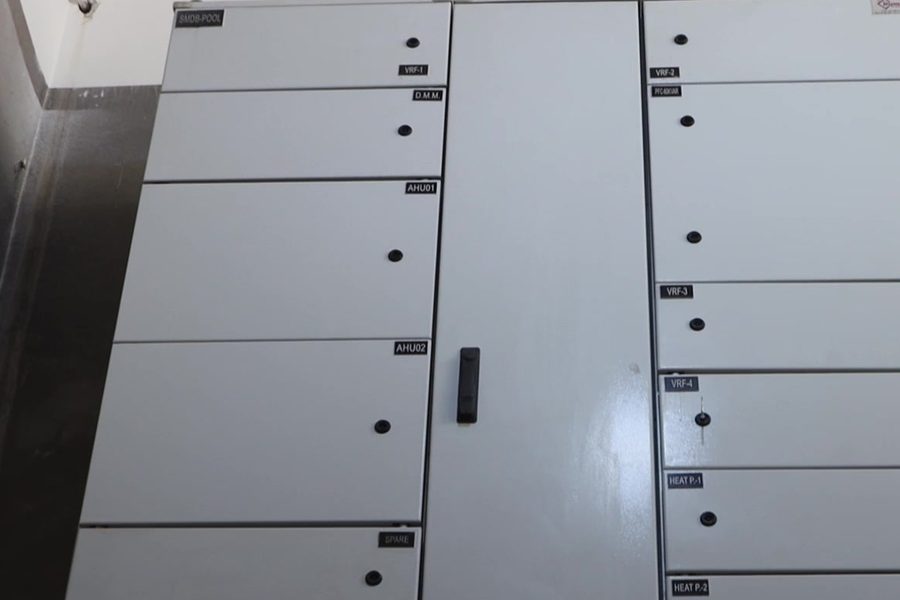
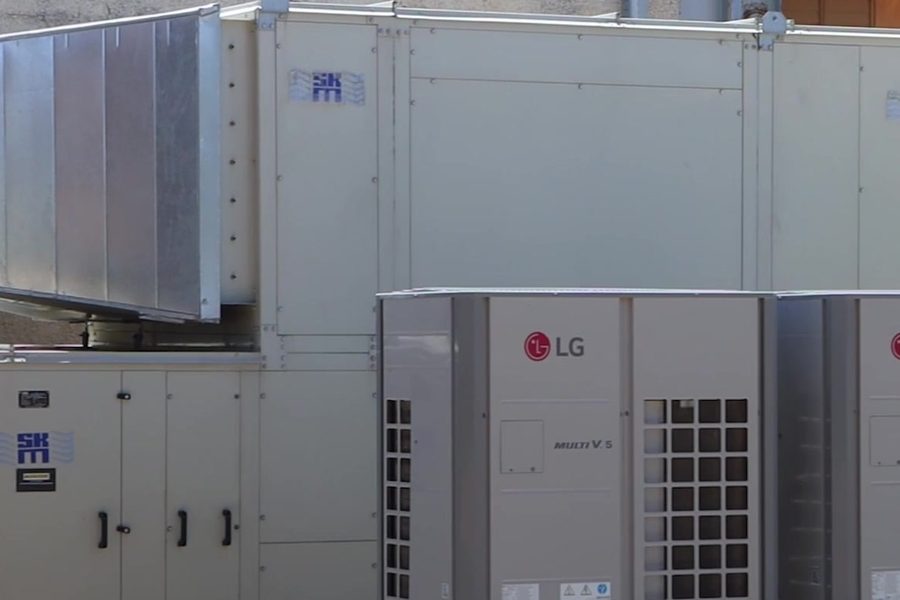
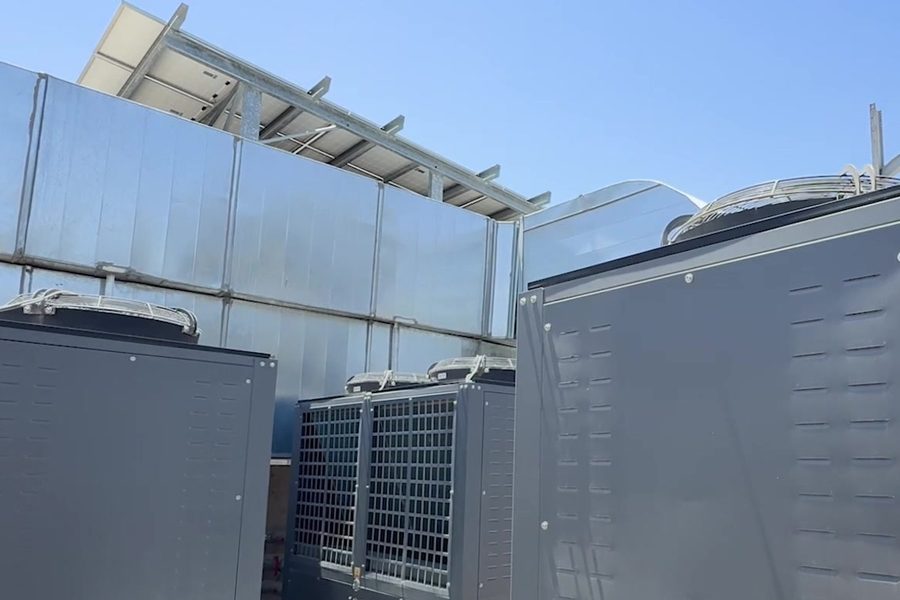
The system was redesigned as one integrated electrical architecture. Full-inverter heat pumps serve the swimming-pool water, VRF systems handle space loads, and air-handling units operate with heat recovery through a dehumidification, cooling, and reheat sequence while also controlling fresh-air requirements.
This approach allows part of the heat previously rejected with exhaust air to be recovered and returned to the pool hall, enabling heating, cooling, ventilation, and humidity control to operate as one coordinated system instead of separate systems working against each other.
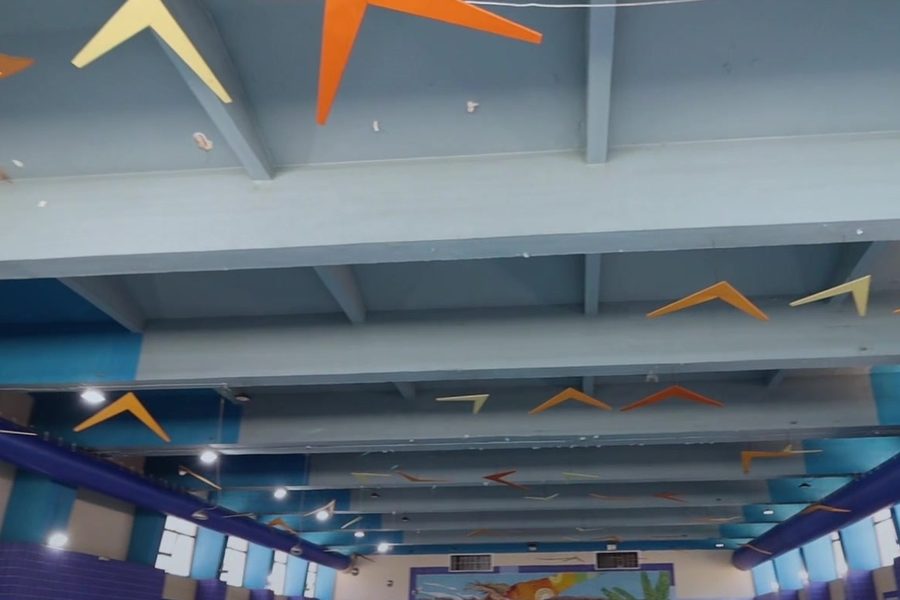
At the time of documentation, the pool hall was operating at 29.8°C and 71.4% relative humidity, with system controls maintaining their defined setpoints. These values represent operating conditions at the time of observation, not claimed energy savings. Consumption records are still being collected, so no savings figure is published until a reliable measurement period is complete.
Challenges
Re-engineering an Olympic pool facility that relied on a conventional chiller for cooling and boiler for heating, while ventilation and dehumidification operated separately and rejected useful heat outdoors.
The objective was to integrate space heating, cooling, pool-water heating, ventilation, and humidity control into one coordinated system while reducing the conflict between independent thermal systems and recovering energy that would otherwise be lost.
Solutions
The conventional architecture was replaced with an integrated electrical system using full-inverter heat pumps for pool-water heating, VRF systems for space-conditioning loads, and air-handling units incorporating heat-recovery logic.
The air-handling process follows a dehumidification, cooling, and reheat sequence with controlled fresh-air supply, allowing recovered heat from the pool air to be returned to the space instead of rejected outdoors.
This architecture integrates heating, cooling, ventilation, and humidity control within one coordinated system rather than operating separate systems with opposing thermal functions.
Photo Gallery