Rawdat Al Maaref Schools — Heat Pump System for Indoor Pool Heating
In indoor swimming pools, the building envelope is not necessarily the main source of heat loss. Evaporation from the water surface can represent a significant portion of the thermal load. The project was therefore approached from an operational perspective before equipment selection, with the pool kept under a thermal cover outside swimming hours and the heating system sized around actual uncovered and operating periods rather than pool volume alone.
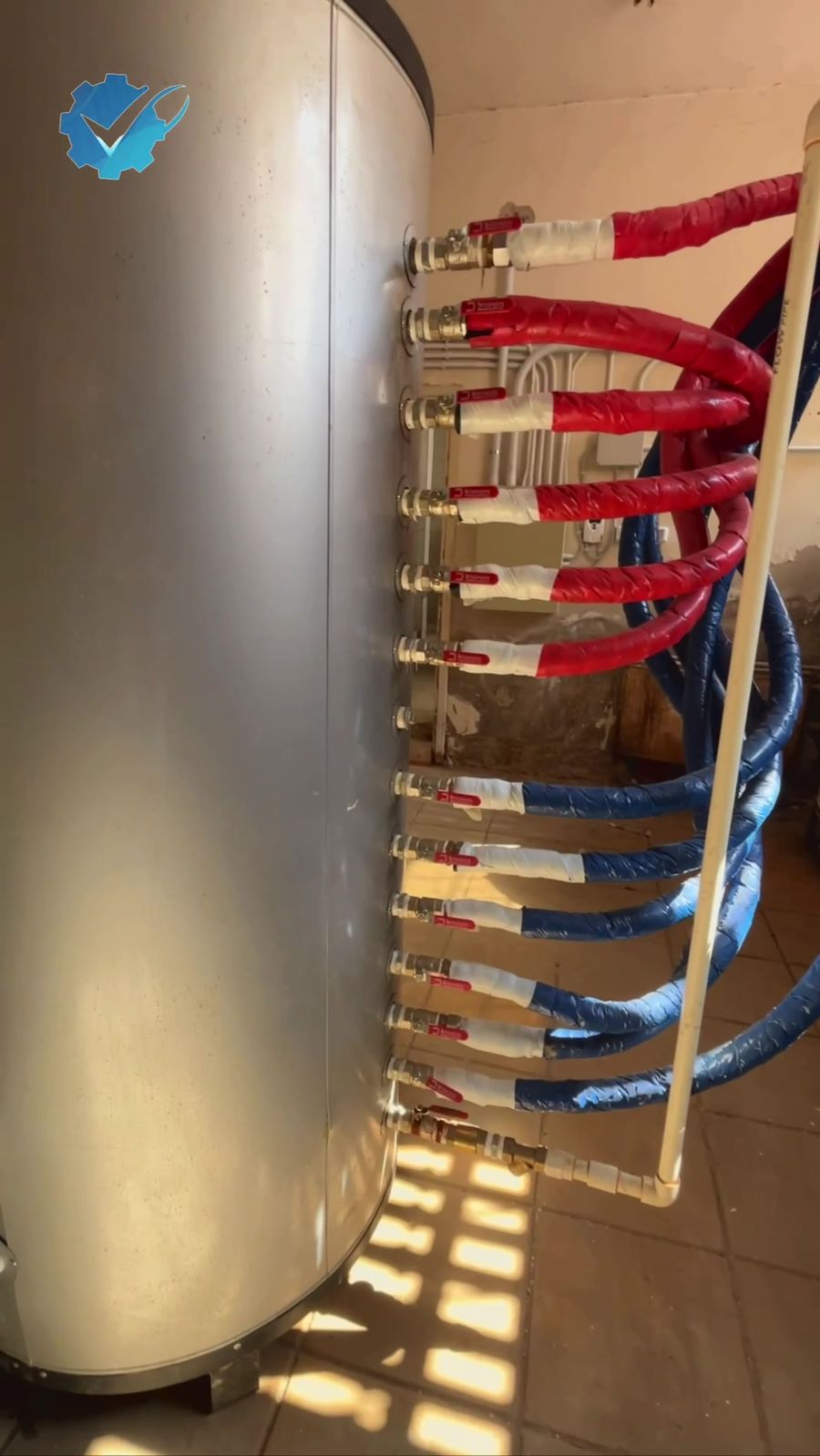
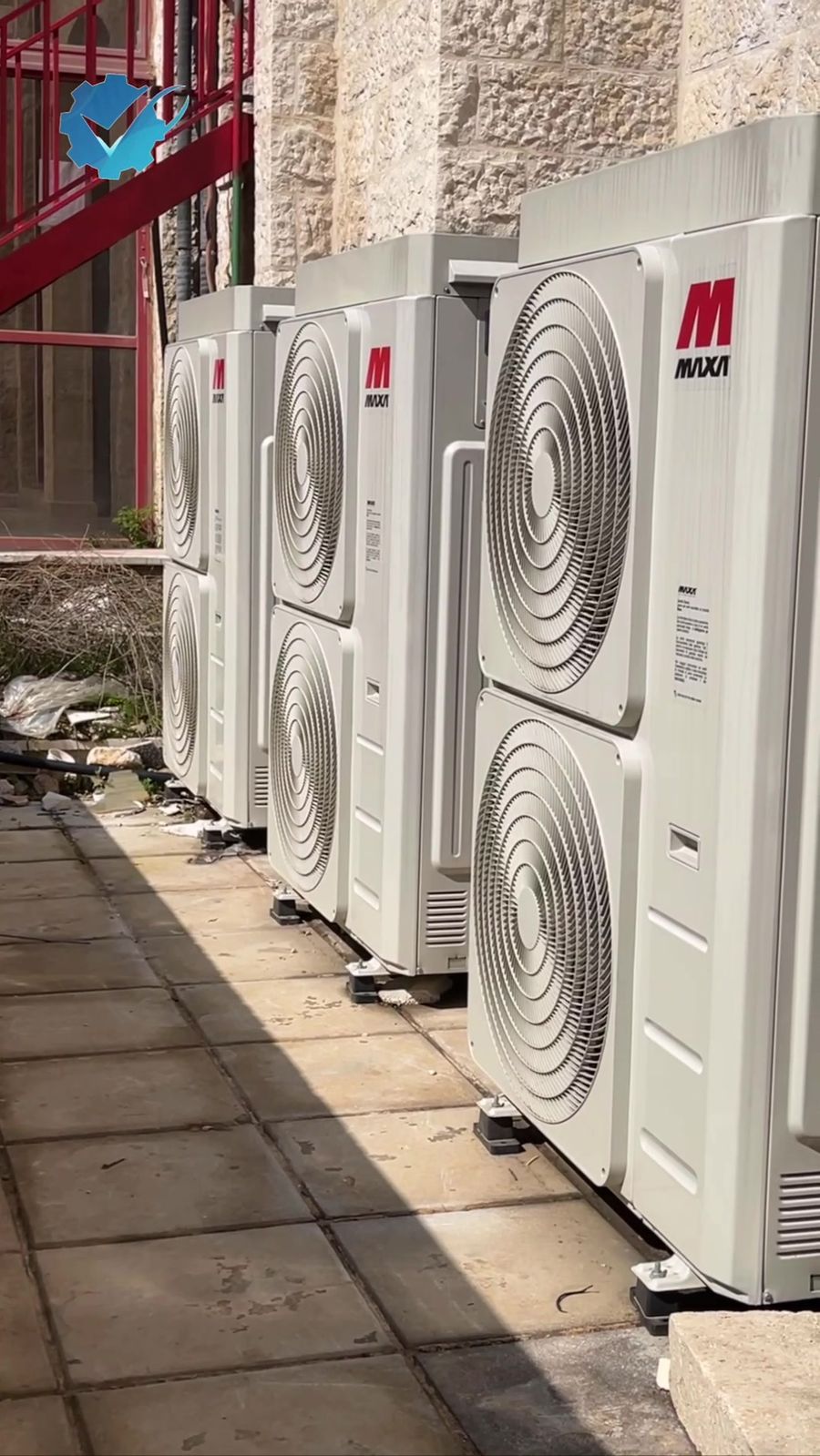
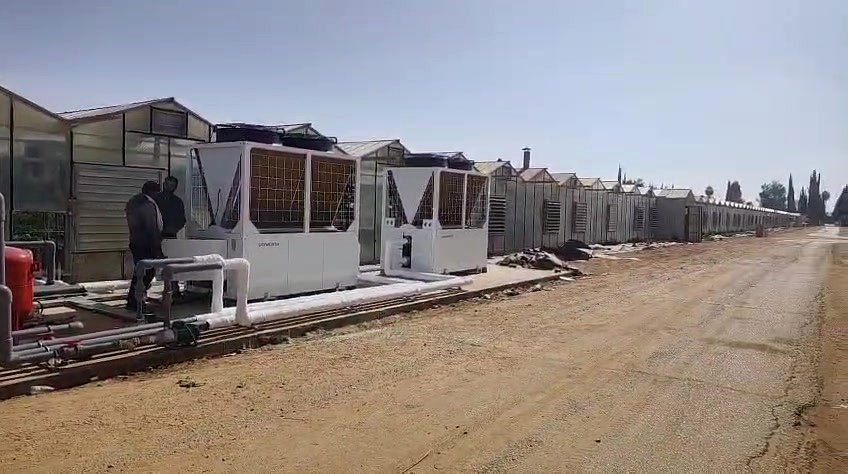
Fuel-based water heating was replaced with MAXA air-source heat pumps. The heat pumps serve the pool through a thermal buffer tank that helps decouple equipment operation from sudden load changes, such as when a full group of students enters the pool at once.
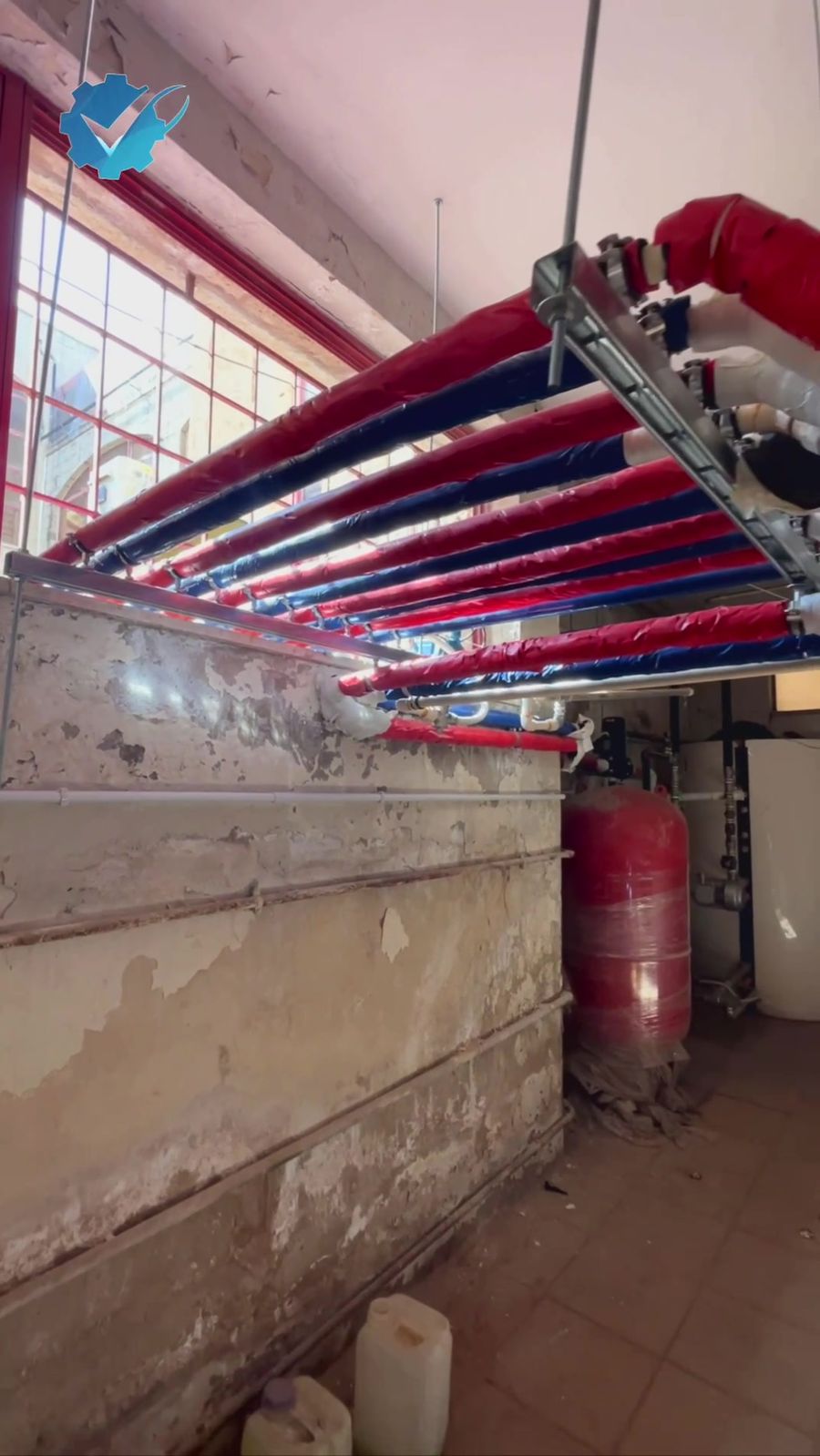
The mechanical room was also reorganized around an insulated hydronic distribution network with manifolds that allow individual circuits to be balanced and isolated independently, enabling maintenance and adjustment without shutting down the complete pool-heating system.
Consumption and performance records are still being collected, so no savings or efficiency figure is published until a reliable measurement period has been completed.
Challenges
Maintaining stable water temperature in an indoor school pool with varying daily usage while addressing heat loss caused by evaporation whenever the water surface is exposed, as well as sudden thermal-load changes when large groups of students enter the pool.
The system also needed to provide better control and serviceability without compromising pool operation.
Solutions
MAXA air-source heat pumps were implemented for pool-water heating, together with a thermal-cover strategy outside swimming hours to reduce evaporation-related heat loss.
A buffer tank was incorporated to absorb sudden changes in thermal demand, while the mechanical-room distribution network was redesigned using insulated hydronic circuits and manifolds that allow each branch to be balanced and isolated independently.
The heating strategy was based on actual pool operating and uncovered hours rather than sizing the system according to pool volume alone.
Photo Gallery