Private Villa — Hybrid Heat Pump and Rooftop Solar PV System
In this residential project, the heat pump and solar PV system were not treated as separate decisions. The concept was to design one integrated energy system connecting heating demand, electrical consumption, and on-site generation.
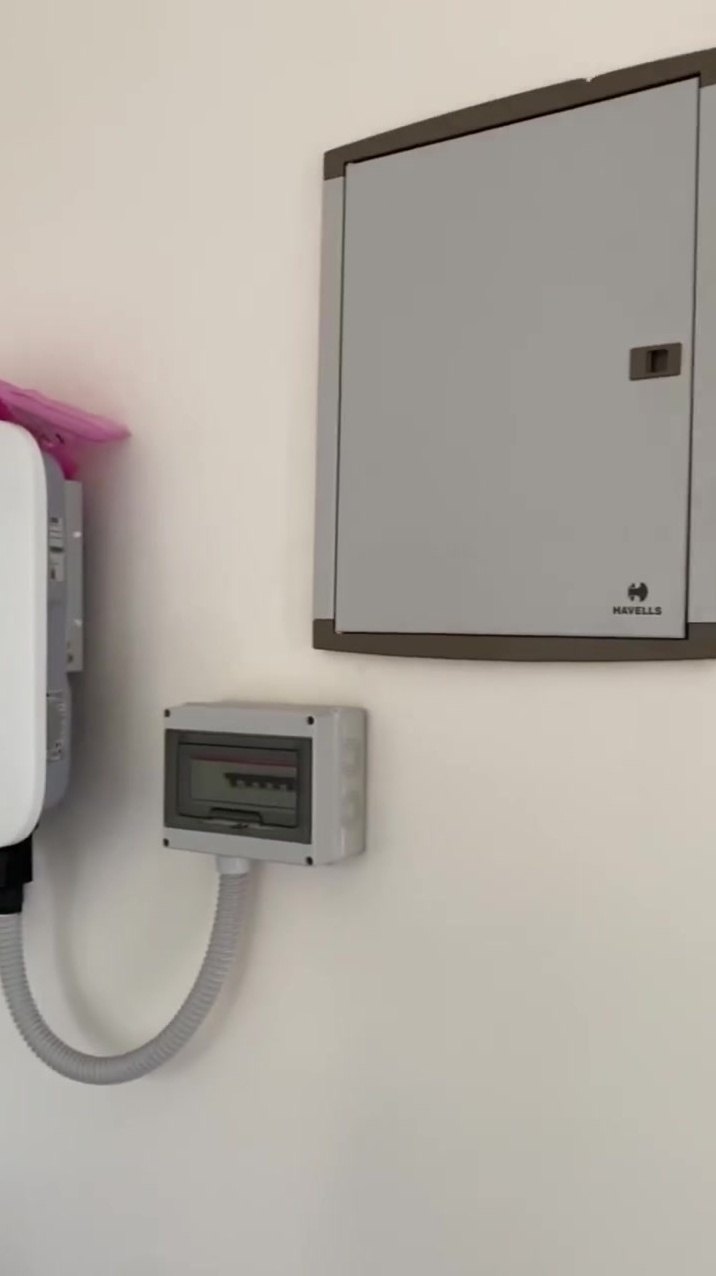
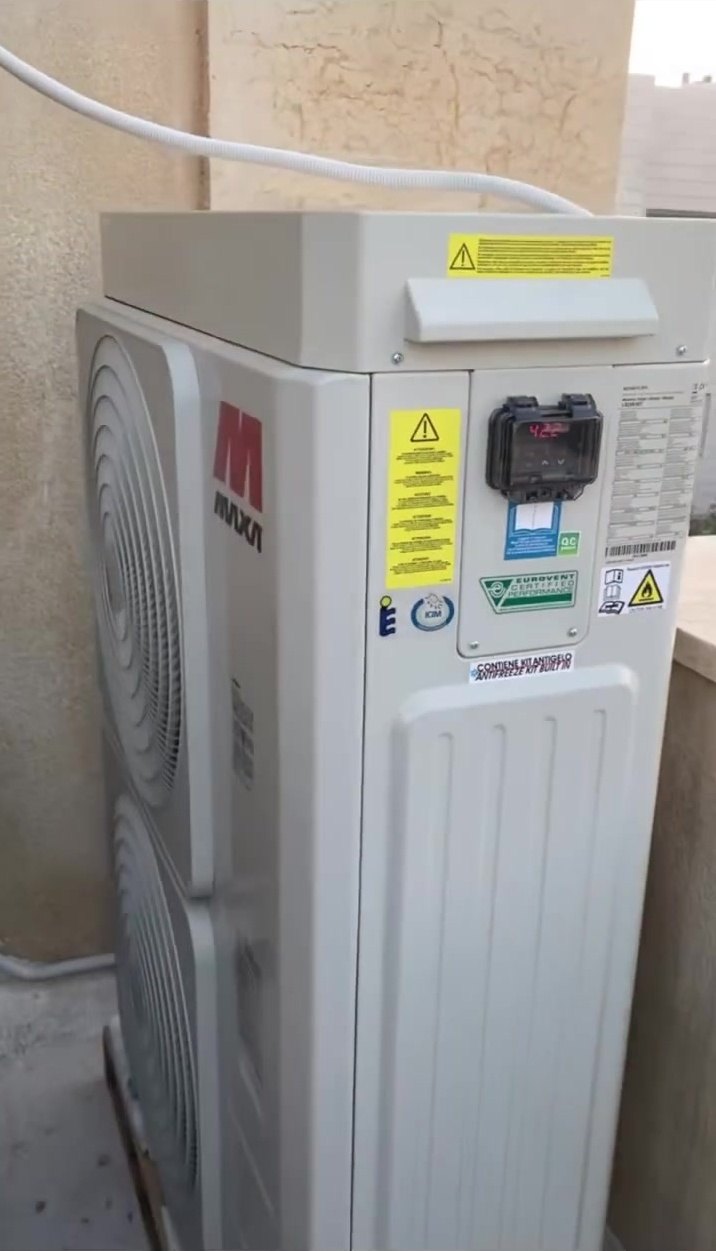
A MAXA air-source heat pump supplies a buffer tank and underfloor heating circuits through dedicated manifolds, while a rooftop photovoltaic system feeds the same electrical meter from which the heat pump draws power.
This approach converts a major portion of conventional thermal demand into an electrical load that can be partially offset by solar generation produced on-site, rather than treating heating and PV as independent systems.
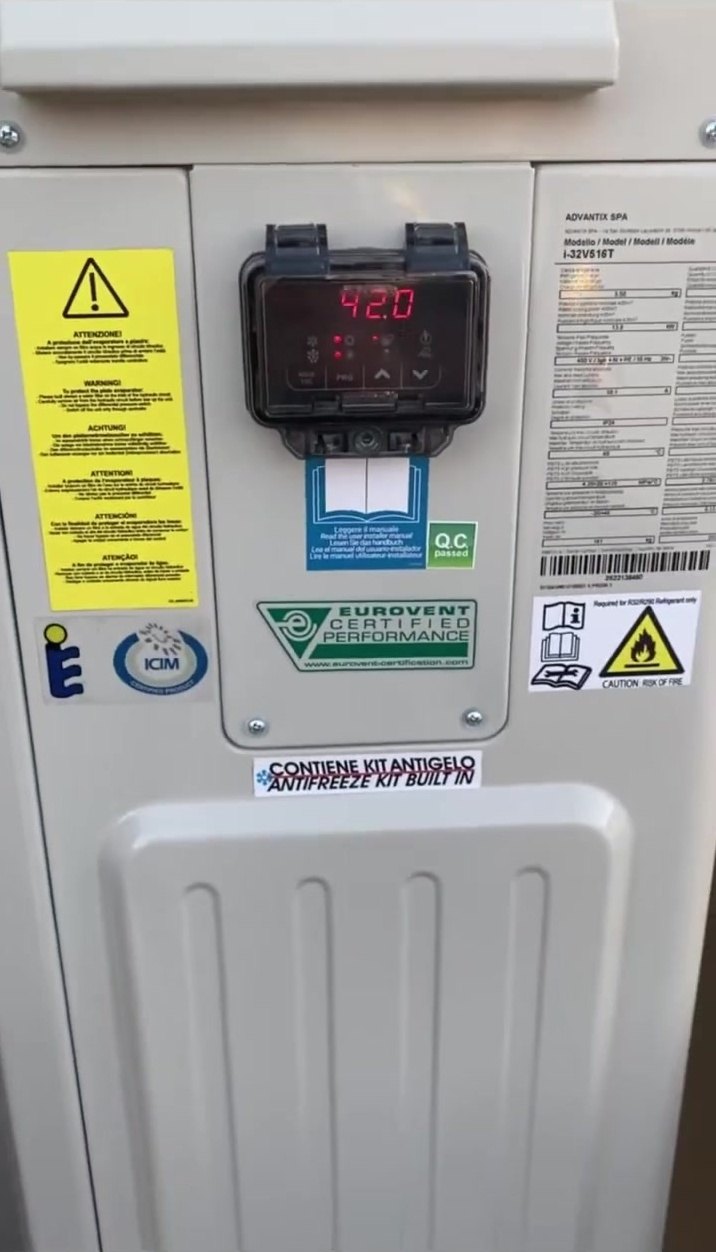
Controls and equipment nameplates were kept accessible and readable so that both the owner and service technician can understand and operate the system without treating it as a closed or opaque installation.
This project is presented as a design pattern demonstrating heat pump and rooftop PV integration. Consumption and savings records are still being collected, so no savings figure is published until a complete measurement period is available.
Challenges
Designing a residential heating system that reduces dependence on conventional energy sources while making effective use of available roof area to generate electricity for household loads, including the heat pump.
The key engineering challenge was to integrate heating demand and solar generation within one coordinated design rather than implementing them as separate systems.
Solutions
A MAXA air-source heat pump was used to supply a thermal buffer tank and underfloor heating circuits through dedicated hydronic manifolds.
At the same time, a rooftop PV system was implemented to feed the same electrical meter used by the heat pump, making solar generation a direct part of the thermal-system operating strategy.
The system follows the principle that PV capacity should be sized according to actual electrical demand and available roof area, rather than simply maximizing panel coverage.
Photo Gallery